There’s a running joke among Australians who’ve been to Tasmania: they come back and tell everyone it’s overrated, just so it doesn’t get too crowded. The truth is the opposite. Tasmania is one of the most extraordinary places in the country — and for retirees, it may well be the perfect destination.
Compact enough to explore at a relaxed pace, rich in history, world-class food and wine, and blessed with some of the most dramatic natural scenery on earth, Tasmania rewards the kind of unhurried travel that retirement makes possible.
Why Tasmania is Perfect for Retirees
Unlike the frantic pace of international travel, Tasmania invites you to slow down. The island is small enough that you’re never more than a couple of hours from something extraordinary, yet large enough to fill two or three weeks without repeating yourself. The roads are quiet, the locals are warm and genuinely proud of their island, and the pace of life is a world away from the mainland.
The climate is temperate — cooler than the mainland, which many retirees find a relief — and the infrastructure is excellent. Accommodation ranges from cosy bed and breakfasts in historic sandstone cottages to luxury wilderness lodges. The food scene, particularly in Hobart, has become genuinely world-class over the past decade.
Where to Go
Hobart is the natural starting point. Australia’s second-oldest city is compact, walkable, and endlessly interesting. The Saturday Salamanca Market — held in the shadow of stunning Georgian sandstone warehouses — is one of the best markets in the country. MONA (the Museum of Old and New Art) is unlike anything else in Australia: provocative, fascinating, and set in a spectacular riverside location. Allow at least half a day.
The Huon Valley, south of Hobart, is apple orchard country — lush, green, and peaceful. The drive along the Huon River is one of the most beautiful in Tasmania, and the region produces outstanding cider, cheese, and smoked salmon.
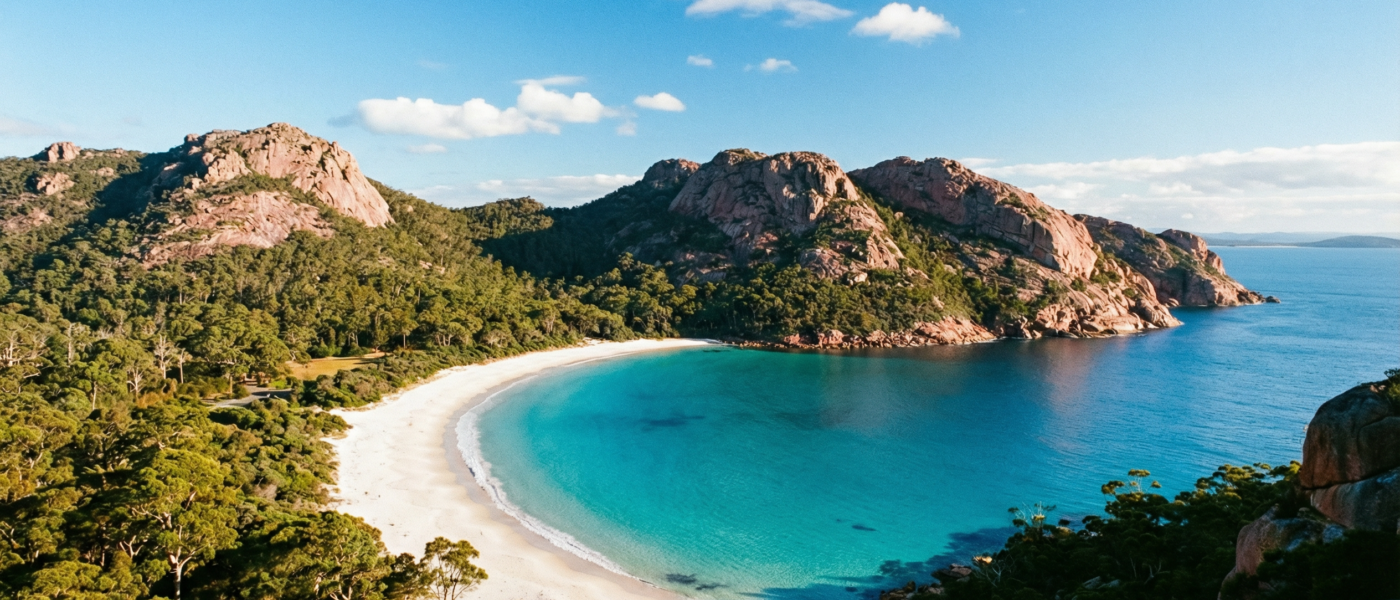
Freycinet National Park on the east coast is home to Wineglass Bay, consistently rated one of the world’s most beautiful beaches. The lookout walk (about 45 minutes return, with some steps) rewards you with a view that genuinely takes your breath away. If walking is difficult, the view from the car park area is still spectacular.
Launceston, Tasmania’s second city, is charming and underrated. The Cataract Gorge — a dramatic natural gorge just minutes from the city centre — is free to visit and features a chairlift, peacocks, and a swimming pool. The Tamar Valley wine region, just north of the city, produces exceptional cool-climate pinot noir and chardonnay.
Cradle Mountain in the central highlands is one of Australia’s great natural icons. The mountain and its mirror-still lake are most spectacular at dawn. Even if you’re not a hiker, the short boardwalk around Dove Lake (about 6km, flat and well-maintained) is one of the most memorable walks in the country.
Practical Tips
Getting there is easy — direct flights operate from Sydney, Melbourne, Brisbane, and Adelaide to both Hobart and Launceston. A hire car is essential for exploring beyond the cities, and roads are in excellent condition.
The best time to visit is late spring (October–November) or autumn (March–April), when the weather is mild and the crowds are thinner. Summer (December–February) is peak season and can be busy, particularly around Hobart and Freycinet.
Allow at least ten days if you want to cover the main highlights without rushing. Two weeks is ideal. Many retirees find themselves extending their stay — or planning a return trip before they’ve even left.
A Final Word
Tasmania has a quality that’s hard to define but immediately felt: a sense of being somewhere genuinely different. The air is cleaner, the light is softer, the history is older, and the natural world feels closer. It’s the kind of place that stays with you long after you’ve come home.
If you haven’t been, go. And if you have, you already know.